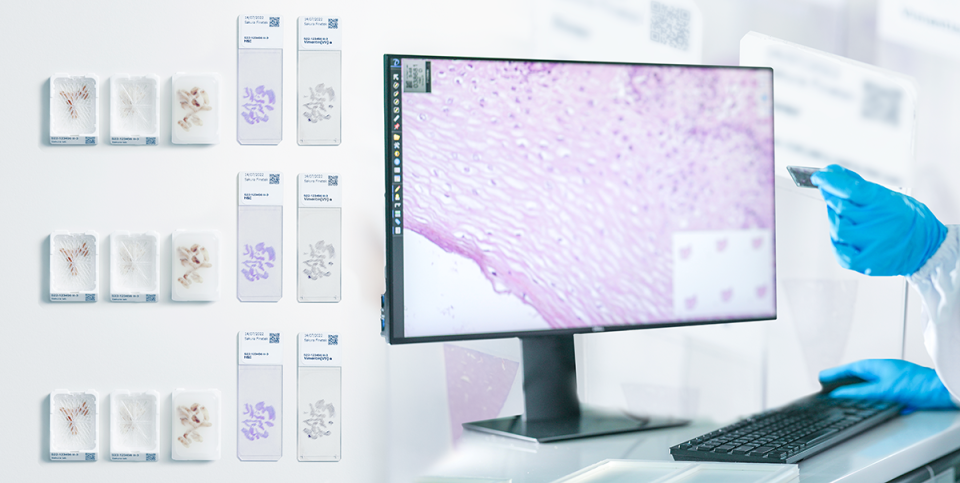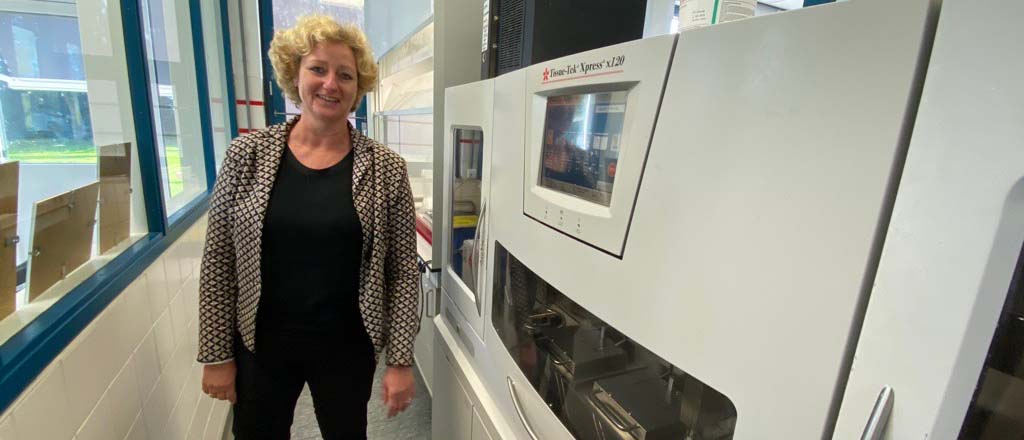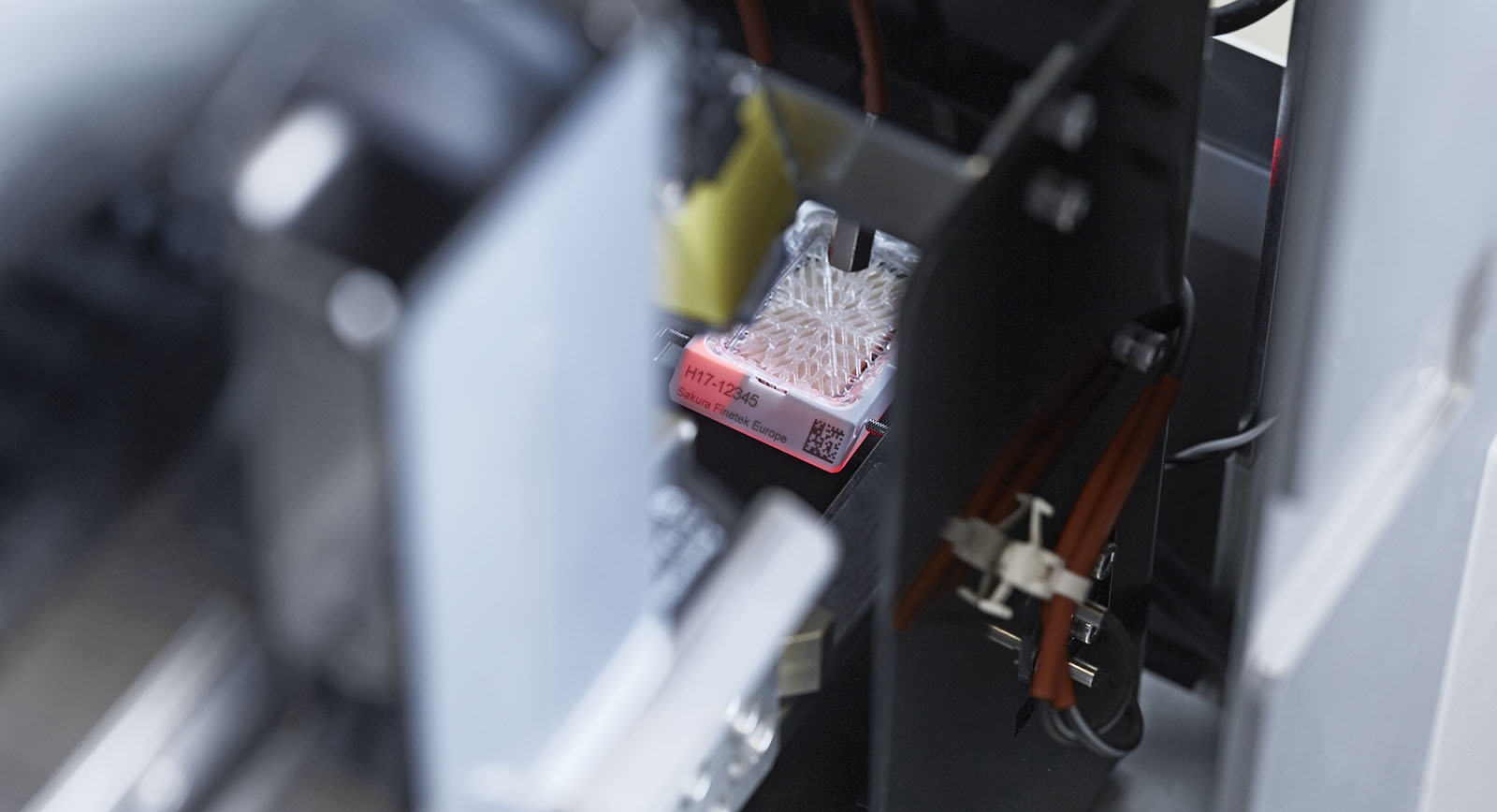
What if standardising embedding could improve more than embedding?
Pathology laboratories face increasing pressure. Case volumes continue to rise, staffing challenges persist and expectations around turnaround times and quality are higher than ever. Yet one of the most critical steps in the histology workflow, embedding, remains highly dependent on individual operator technique.
Variability during embedding can affect tissue orientation, fragment retention, trimming effort, section quality, technician workload and, ultimately, diagnostic confidence. The consequences do not stop at embedding; they travel downstream through the entire workflow.
This raises an important question: if embedding can be standardised, what impact could that have on the rest of the laboratory process?
New evidence from routine pathology practice
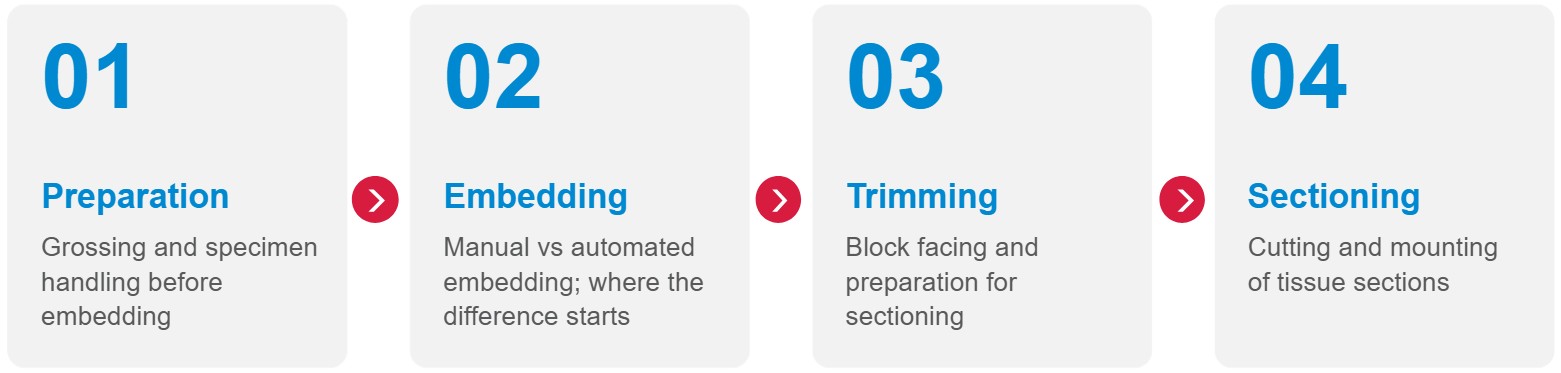
An independent study by Gambella et al. evaluated the impact of automated embedding across 354 routine specimens in a pathology laboratory in Genoa, Italy. Rather than focusing solely on embedding itself, the researchers measured technician hands-on time throughout the workflow, including preparation, embedding, trimming and sectioning.
Importantly, the study measured human workload rather than instrument runtime. The objective was simple - determine whether automation could reduce technician involvement and create efficiencies beyond the embedding station.
The results demonstrate that automated embedding can create meaningful improvements across multiple workflow stages.
Up to 55% less hands-on time for technicians
The study found significant reductions in technician hands-on time across all specimen types evaluated.
| Endoscopic biopsies | Needle biopsies | TURB / TURP specimens |
|
|
|
These improvements were measured across the workflow stages involved in the study, including trimming and sectioning, rather than embedding alone.
Why the impact extends beyond embedding
The value of automated embedding lies not only in saving time at a single workstation. By reducing variability and standardising tissue orientation, laboratories can achieve more consistent outcomes throughout downstream processes. According to the study, automated embedding contributed to:
|  |
The research also reported operational benefits, including a consistent 48-hour turnaround time and the recovery of previously stalled cases.
When variation is removed early in the workflow, subsequent steps can become more predictable and efficient.
From standardisation to operational excellence
For pathology laboratories, standardisation is not an objective in itself. It is the foundation for scalability, efficiency and confidence.
The findings from this study highlight four key areas where automated embedding can support laboratory performance:
Standardise: Reduce operator dependency and ensure specimens are processed consistently, regardless of who performs the task.
Optimise: Recover valuable technician time during trimming, sectioning and related workflow activities, allowing resources to be redirected where they are needed most.
Scale: Manage increasing case volumes without proportionally increasing staffing requirements, helping laboratories maintain throughput as demand grows.
Trust: Improve tissue orientation and fragment retention, reducing re-cuts and providing greater consistency for diagnostic evaluation.
The pathology unit evaluated in the study now processes approximately 98% of its samples using automated embedding, demonstrating confidence in the approach for routine practice.
"By demonstrating efficiency improvements, we advocate for increased automation of tissue sample embedding, enabling redeployment of laboratory technicians to other critical phases of the pathology unit workflow."
One standard step. Consistent impact.
Automation is often evaluated as a replacement for a manual task. This study suggests a broader perspective. By standardising embedding, laboratories can influence multiple downstream workflow stages, reduce workload variability and create capacity where it is needed most.
For laboratories seeking to improve efficiency without compromising quality, automated embedding may offer benefits that extend far beyond the embedding station itself.
References
Gambella A, Zito L, Bottaro C, et al. Automated paraffin embedding of tissue samples significantly reduces overall workflow time in routine pathology practice. Pathologica. 2026.
EMWEB0034EN Rev.01